


When the Music Found Me Again

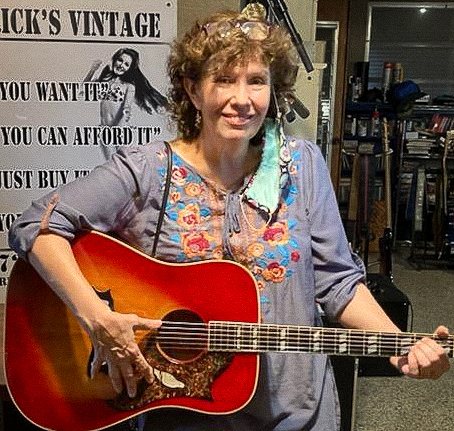
When I paused at 63 to ask what still brought me joy, I found an old dream waiting to be lived.
By Leighnae Hanley
The year I was 17 was special. It was the year I embraced my faith, discovered Contemporary Christian Music, and learned how to play guitar.
In 1978, I went to a Performing and Visual Arts School in Houston (think Fame).
I was a vocal major, trying to figure out life—sitting in the school hallway with a Bible on my lap, hoping that the “cute guy” would walk by and see that I was philosophical, like him.
(I was, as I said, trying to figure out life—but I was also a teenager, and he looked like James Taylor.)
Instead, a familiar girl walked by—tall and thin, with a winning smile and cocoa-colored skin, a guitar strapped on her back. She stopped and asked me what I was reading.
That one question turned into this big conversation about life, faith, and music. The next thing I knew, I was walking down the hall with her—Bible in one arm, the other gesturing wildly as we talked about the meaning of life.
“Cute guy” would have to wait for another day.
I didn’t know Melva was a preacher’s kid—she was cool, easygoing, and popular. We became fast friends.
She invited me to her dad’s church, and I told her about losing my mom suddenly three years earlier. The afterlife had been on my mind ever since. I still had my dad and three brothers, but we didn’t really talk about spiritual things.
My dad was pretty depressed after my mom died and spent most nights at the neighborhood bars. My brothers and I kind of fended for—and fought—amongst ourselves.
Melva and I kept talking, and she introduced me to her love of music—and to the guitar. Her whole family was musical. Her mom was a piano teacher and had taught all the kids.
Melva was passionate about playing, and a great mentor. Her house became a haven of sorts. The words and music she shared filled an empty space in me and helped answer questions I didn’t even know I was asking.
She taught me a few basic chords and loaned me her chord book. I remember being obsessed with By My Side from the musical Godspell. The song was haunting.
The lyrics were from the point of view of the disciples—about to lose their beloved leader but unsure how to follow him. The chords were simple, so I picked out the tune and Melva and I harmonized.
We performed it together at my exit recital. I felt like my mom was there. The judges gave us strong critiques, and those little successes gave us momentum.
We formed a duet called Pearls and played music that sounded like our generation—folksy, bluesy, and meaningful. We wrote 40 songs together and played a lot of them at coffeehouses and weddings.
Sooner than expected, we each got married and busy with husbands, babies, and jobs. But we played regularly for at least two years before life pulled us in different directions.
We both moved all over the world but stayed in touch. Melva became a middle school drama teacher, then a choir director and pastor’s wife. I became a church children’s director, an elementary school teacher, and later an ESL teacher abroad.
But our guitars mostly found their places back in their cases.
Until two years ago.
A serious car accident made me pause—and I decided to take a year-long hiatus from teaching. I was 63. Burned out. Tired. I started asking myself how I’d gotten so busy doing “work,” but felt less and less joy in any of it.
I remembered the passion I’d had for music as a teenager and wondered if I could get it back.
I felt rusty. I couldn’t support my breath the way I used to when I sang. But I picked up a book I’d been reading—Atomic Habits by James Clear—and it got me thinking.
He wrote about building the life you want with small daily changes—just ten minutes a day.
That seemed too simple to work, but I decided to try. I started with what I missed most: guitar and singing.
I looked for places to plug back in. I joined a local community choir that meets once a week. And I found an online guitar program called Tony Polecastro’s Acoustic Challenge that follows the same 10-minute-a-day “habit stacking” idea James Clear described. It introduced me to new playing styles in very small, manageable chunks.
And I remembered how much I loved playing with other people.
So I asked our worship leader if I could join the team—even just to sit on the side and learn from them. I’d always disqualified myself because there were so many “real musicians” more skilled than I was.
But to my surprise, he said, “Sure—come join us!”
Turns out, they needed someone who could harmonize.
Now music is back in my daily rhythm—at home, in quiet times, even in the classroom. It brings joy not just to me, but to my students. It’s helped me reconnect with my work, my voice, and my community.
I feel like I’ve gotten an important piece of my life back.
I hope my story encourages someone else—especially if you’re feeling burned out or like you’re living the same day over and over—to take a breath, look inward, and consider what still brings you joy.
You might be surprised to find it’s something you already loved, waiting quietly in the background.
I wish you good success in your journey forward.
Thank you for your story!
The importance of music is undeniable.
Your desire to integrate bring music back into your life is inspiring.
Keep playing and sharing your story!
What a beautiful story—it’s really inspiring to see how rediscovering music later in life can bring so much joy and meaning back into everyday life.
This is a very honest and emotional story about youth, faith, and music.
I truly admire her love of music.
Blessings on this journey. I love that music is the source for so many of us.