
A Part Will Always Stay

From daughter to grandmother, one song carried it all. A quiet moment of love, memory, and something meant to last.
By Wendy Drexler
After my mom died of early-onset dementia in 2006, I became quietly obsessed with keeping my brain healthy. Her decline was so fast—too fast. We could barely keep up as she moved from her home, to assisted living, to nursing care. One of my deepest fears has always been that I might follow the same path.
So on my birthday in 2015, I made a decision. I picked up a guitar.
I loved music, but this wasn’t just about passion. I had read that learning an instrument could create new neural pathways, helping to preserve brain function. Every time I felt frustrated as a beginner, I’d think of Mom—how much she loved music. I’d picture those little neural connections forming in my mind, like sparks. That image still inspires me today.
As I got more comfortable with the guitar, a new desire emerged: I wanted to create. I took songwriting workshops and started writing lyrics. Eventually, I collaborated with a friend to write a song called “It Occurs to Me.” It was about aging and legacy. The chorus goes:
It occurs to me, life is never done,like the rising sun, it occurs to me.It occurs to me, a part will always stay,to live another day, it occurs to me.
My dad loved that song.
On February 22, 2020—just before the COVID shutdown—I sat beside him in hospice and sang it to him as he took his last breaths.
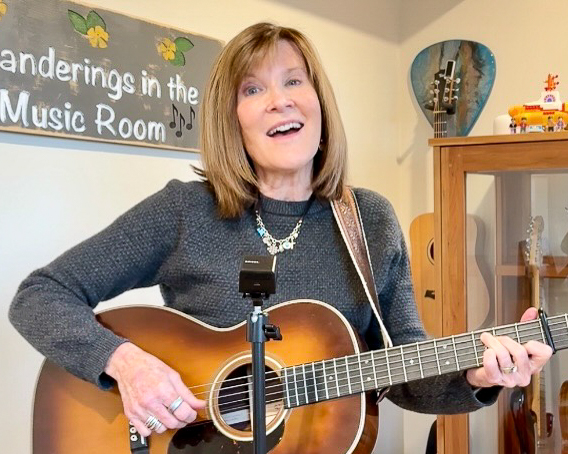
He had randomly bought the guitar I used at an auction for a hundred bucks. He never played it. But it always sat propped up in his living room for me to use whenever I visited. That moment—sitting on his bed, playing his guitar, singing the words I wrote—felt like the reason I had ever picked up the instrument in the first place. Every chord I’d practiced was for that moment.
I’ve since upgraded to a custom Martin 00-28 that I adore. But that old auction guitar still holds a special place in my heart.
My guitar journey has grown into something bigger. I started a YouTube channel and a website where I collect and share my songs as a legacy project—for my kids, my grandson Eli, and future generations. I recently became a grandma, and recorded a whole collection of children’s songs just for him.
And those lyrics? They still ring true:
A part will always stay, to live another day.
Even when I’m gone, my songs—and the love behind them—will remain. That’s what the guitar gave me: a way to remember, to honor, and to pass something on.
Never underestimate the power of a song.
After my mom died of early-onset dementia in 2006, I became quietly obsessed with keeping my brain healthy. Her decline was so fast—too fast. We could barely keep up as she moved from her home, to assisted living, to nursing care. One of my deepest fears has always been that I might follow the same path.
So on my birthday in 2015, I made a decision. I picked up a guitar.
I loved music, but this wasn’t just about passion. I had read that learning an instrument could create new neural pathways, helping to preserve brain function. Every time I felt frustrated as a beginner, I’d think of Mom—how much she loved music. I’d picture those little neural connections forming in my mind, like sparks. That image still inspires me today.
As I got more comfortable with the guitar, a new desire emerged: I wanted to create. I took songwriting workshops and started writing lyrics. Eventually, I collaborated with a friend to write a song called “It Occurs to Me.” It was about aging and legacy. The chorus goes:
It occurs to me, life is never done,like the rising sun, it occurs to me.It occurs to me, a part will always stay,to live another day, it occurs to me.
My dad loved that song.
On February 22, 2020—just before the COVID shutdown—I sat beside him in hospice and sang it to him as he took his last breaths.
He had randomly bought the guitar I used at an auction for a hundred bucks. He never played it. But it always sat propped up in his living room for me to use whenever I visited. That moment—sitting on his bed, playing his guitar, singing the words I wrote—felt like the reason I had ever picked up the instrument in the first place. Every chord I’d practiced was for that moment.
I’ve since upgraded to a custom Martin 00-28 that I adore. But that old auction guitar still holds a special place in my heart.
My guitar journey has grown into something bigger. I started a YouTube channel and a website where I collect and share my songs as a legacy project—for my kids, my grandson Eli, and future generations. I recently became a grandma, and recorded a whole collection of children’s songs just for him.
And those lyrics? They still ring true:
A part will always stay, to live another day.
Even when I’m gone, my songs—and the love behind them—will remain. That’s what the guitar gave me: a way to remember, to honor, and to pass something on.
Never underestimate the power of a song.
The image of picking up a guitar on your birthday in 2015 is especially moving because it turns fear into a deliberate act of hope. Even as dementia took so much from your mother, this story shows how learning, music, and memory can leave a part that always stays.
The image of picking up a guitar on your birthday as an act of protecting your future self is deeply moving. I especially appreciate how the piece holds grief and hope together—your mother’s rapid decline remains part of the story, but so does the music and possibility you chose to build.
The decision to pick up a guitar after your mother’s decline feels both courageous and deeply practical—a way of building new neural pathways while making room for joy. “A part will always stay” beautifully captures how music can preserve connection even as memory changes.
The image of picking up a guitar on your birthday as an act of reclaiming your future is deeply moving. I especially appreciate how the story holds both the fear of following your mother’s path and the hope that learning something new can help create another one.
The image of picking up a guitar on your birthday as an act of resistance to your mother’s early-onset dementia is deeply moving. It’s powerful how music becomes not just a passion, but a way of making sure a part of you will always stay.
The image of picking up a guitar on your birthday in 2015 is especially moving—turning fear of your mother’s decline into an act of learning and renewal. “A part will always stay” feels like a beautiful reminder that music can preserve connection even when memory changes.
The image of picking up a guitar on your birthday after witnessing your mother’s rapid decline is especially moving. “A Part Will Always Stay” captures how music can become both a creative practice and a way of holding on to identity, memory, and hope.
The image of picking up a guitar on your birthday as an intentional act of brain health is deeply moving. I especially appreciate how the article transforms fear of dementia into a practice of connection, creativity, and hope.
The image of picking up a guitar on your birthday as an act of hope is deeply moving. “A Part Will Always Stay” captures how music can preserve connection even when memory and identity are under threat.
The image of picking up a guitar on your birthday as an act of hope is deeply moving. I especially appreciate how learning music becomes more than a passion—it’s a way of creating new neural pathways while carrying your mother’s memory forward.
The image of picking up a guitar on your birthday as an act of hope, not just passion, is deeply moving. “A part will always stay” feels especially true here—music becomes a way of preserving connection even as memory changes.
The image of picking up a guitar on your birthday as an act of hope is deeply moving. I especially appreciate how the music becomes more than brain health—it becomes a way of carrying your mother’s memory forward while reclaiming your own future.
The image of picking up a guitar on your birthday as a response to your mother’s rapid decline is deeply moving. “A Part Will Always Stay” captures how music can preserve not only memory, but also a sense of self amid uncertainty.
The decision to pick up a guitar on your birthday feels especially powerful—not as a guarantee against dementia, but as a way of building new connections while carrying your mother’s memory. “A part will always stay” beautifully captures how music can preserve both identity and love.
The guitar becomes much more than a strategy for protecting the brain—it’s a way of reclaiming agency from the fear of following your mother’s path. “A part will always stay” feels especially powerful here, suggesting that music can preserve connection even as memory changes.
The connection between your mother’s rapid decline and your decision to pick up a guitar in 2015 is deeply moving. It’s powerful that music became not only a source of joy, but also a way to build something lasting in the face of fear.
The decision to pick up a guitar after your mother’s death feels like such a meaningful act of reclaiming possibility from fear. Even as memory changes, the music—and the part of you shaped by learning it—can remain.
The image of picking up a guitar on your birthday as a way to face the fear of dementia is especially moving. It shows how learning something new can become both an act of hope and a way of carrying a part of your mother with you.
The shift from fearing dementia to picking up a guitar on your birthday feels deeply moving. “A part will always stay” captures how music can preserve connection, even when memory and time become uncertain.
Your birthday guitar in 2015 — that deliberate choice to build new neural pathways as a counterweight to inherited fear — really stayed with me. It’s a reminder that even while we can’t control what might come, we can choose how to live with the part that will always stay.
The image of you picking up that guitar on your birthday—not just for passion but as a quiet act of defiance against your deepest fear—really stayed with me. It’s such a beautiful way to honor your mom while also carving out a new path for yourself. That part of her will always stay, but so will the new music you’re creating.
The image of you picking up that guitar on your birthday—not just for passion but as a quiet act of defiance against your mother’s path—really stayed with me. It’s striking how the very thing you did to protect your brain also became a way to leave something behind, a part of you that would remain regardless of what memory might do.
What a truly touching story! It’s incredible how a simple act like picking up a guitar can blossom into such a profound legacy. The way music connects us to memories and loved ones is so powerful. Speaking of engaging activities, sometimes I find a little break with something like paper.io 2 helps clear my head, much like your music seems to do for you!
Hopefully once I understand sharps and flats, I’ll finally be able to figure out songs by ear instead of just watching YouTube tutorials.
This is exactly what I needed to hear! I’ve been playing guitar for a few months now and I can play some basic chords, but I realized I was just copying finger positions without actually understanding what I was playing. Learning that notes are basically the written language of guitar totally clicked for me—it makes so much sense why understanding the musical alphabet would make everything else fall into place. I’m definitely going to work through this lesson, even though theory kind of intimidated me before. Hopefully once I understand sharps and flats, I’ll finally be able to figure out songs by ear instead of just watching YouTube tutorials.
Around the same time, my sister suggested I pick up guitar lessons again, something I hadn’t done since college. I was skeptical at first, but forcing my hands to work through the soreness and clumsiness gave me a small sense of control back. Concentrating on chords and rhythm helped quiet the constant nerve chatter. It wasn’t a cure, but it made the waiting between doctor visits far more bearable.
That article, though, was the real shift. It explained the difference between standard symptom management and actual emerging therapies like IVIG for immune-mediated cases and even sodium-channel blockers. For the first time, I didn’t feel like I was just “living with it.” I took the printout to my neurologist, and we finally started talking about advanced options that made sense. If you’re tired of being told there’s nothing to do but manage the pain, read that piece. It gave me a path forward when I thought I had none.
so great, i like that
beautiful guitar. It reminds me visually of Martin’s CEO-7, but has a much brighter high end. Sounds as good as it looks.
The emotional journey described here truly resonates. The power of music as a tool for healing and cognitive preservation is profound. Wendy’s dedication to learning the guitar not only honors her mother’s memory but also showcases the transformative impact of art on personal growth and well-being.