
Guitar Notes: Everything a Beginner NEEDS to Know


Guitar notes … what are they, and why should you care?
Think of guitar notes as the written language for playing guitar. Everything from chords to melodies uses guitar notes.
Learning guitar notes will help you comprehend new music, hone certain guitar techniques, and communicate with other musicians more easily.
In this lesson, we will cover:
- Notes vs. chords
- The musical alphabet (so you can “write” the language!)
- Sharps and flats, and why they’re important
- Bonus theory along the way
Oh, snap…did I just say the “T” word?
Look, there’s just going to be a tiny bit of theory in this guitar notes lesson. I’ll keep it on the light side — I promise.
Now, if you’re looking for more of a framework of how to practice guitar, I have something for you.
First, if you’re still on the fence about online guitar lessons, I want you to know you’re not alone. While there are many benefits, the biggest problem with online guitar lessons is the overwhelm – but I can help with that.
Second, I want you to know about my guitar reboot workshop that I’m offering for free – to help you overcome your overwhelm. You can learn more about it by clicking here. If you’re someone who thinks guitar is hard to learn, I promise I can show you an easy way to break it down in a way that’s manageable, understandable, and fun.
All I’ll say for now is that this workshop has helped thousands of guitar players already…
Anyways, let’s dive into guitar notes 101…
Table of Contents
- Guitar String Notes for Standard Tuning
- Guitar Notes vs. Guitar Chords
- Guitar Notes in Relation to the Fretboard
- Naturals vs. Sharps and Flats
- Guitar Notes Exercise on the E String
- Taking 10 Minutes Every Day to Get Better
Guitar String Notes for Standard Tuning
Before you go any further, you need to familiarize yourself with guitar string notes. Without knowing the string names and notes, we won’t be able to learn any other guitar notes!
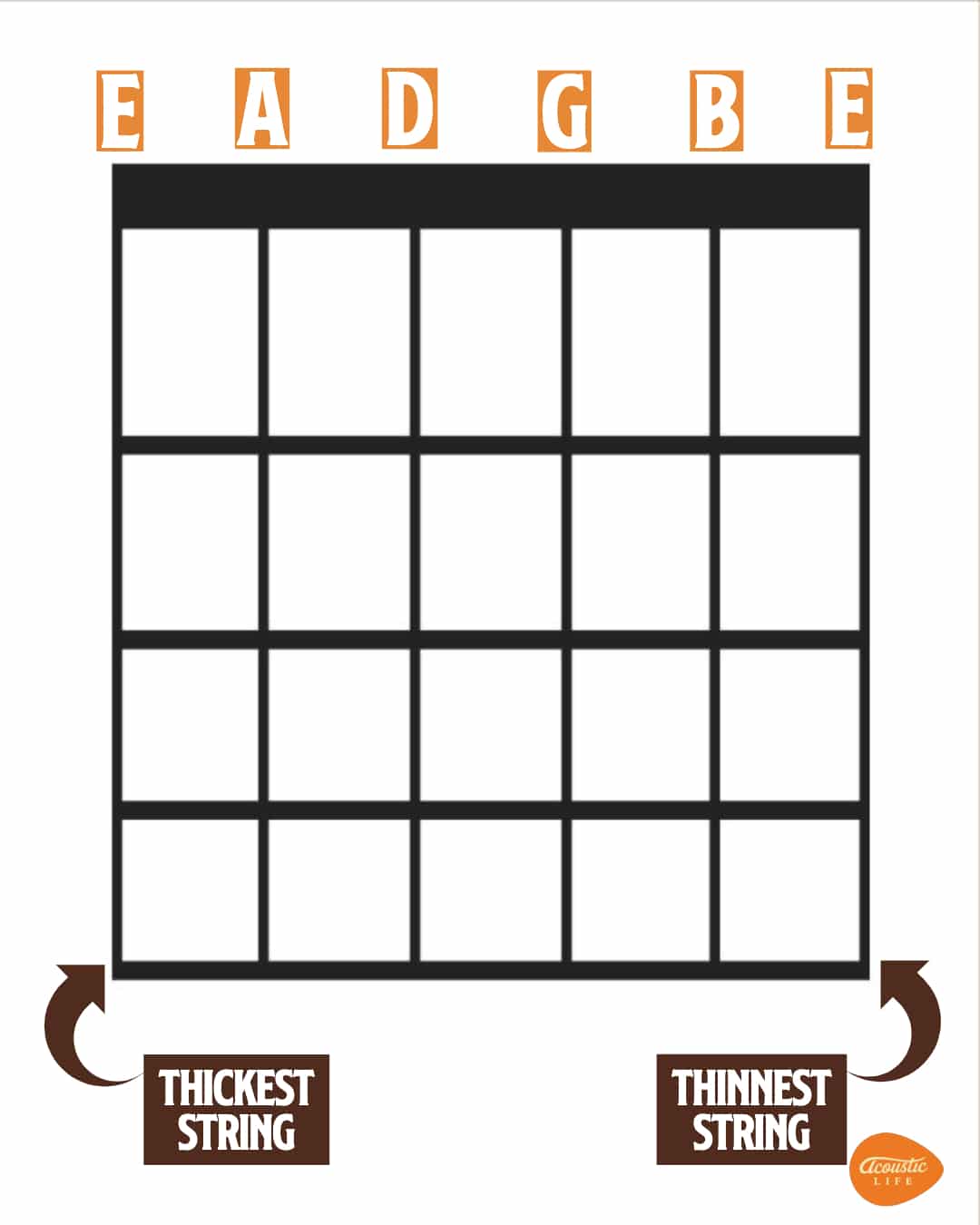
Most guitars have 6 strings, each with a different note. In standard tuning, and from low to high, the guitar string notes are: E, A, D, G, B, E. This is constant across different brands and guitar types. Whether you have a Gibson or a Martin, an Ibanez or Epiphone, the notes remain the same.
There are a few phrases you can use to remember each string name: Eddie Ate Dynamite, Good Bye Eddie, or, Elvis Always Dug Good Banana Eating.
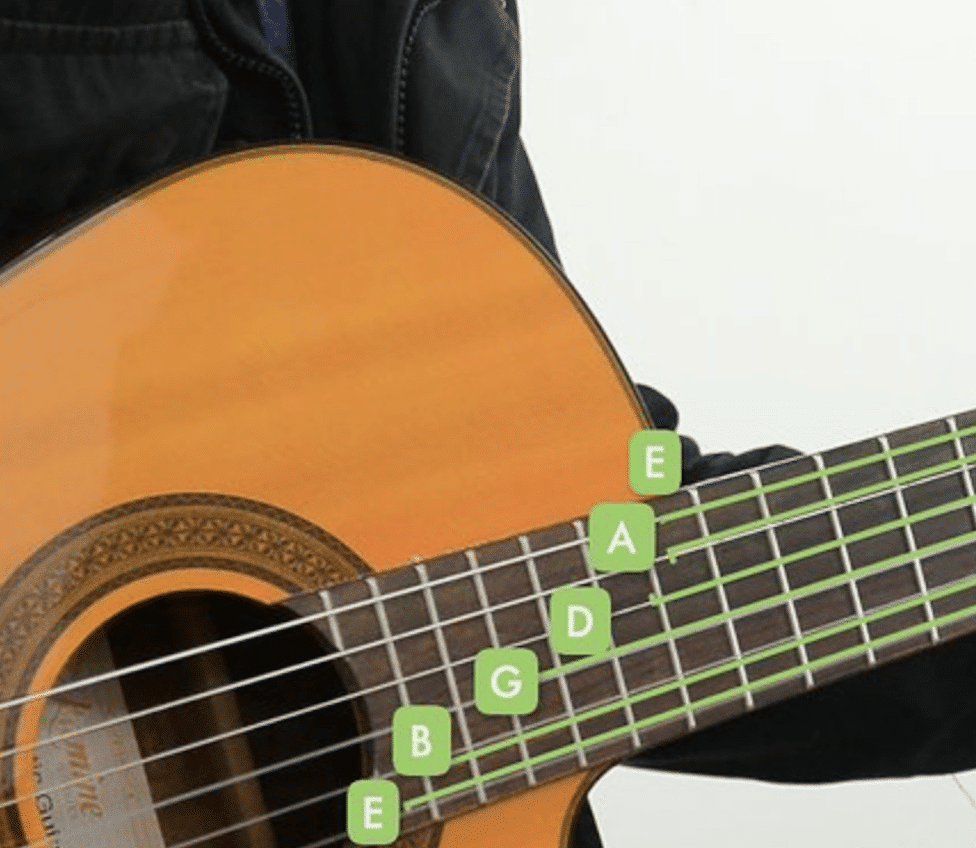
Notice that the strings are arranged from thickest (lowest note) to thinnest (highest note). There are plenty of other tunings, called alternate tunings (open C, open G, drop D, etc). For now, let’s stick with standard tuning.
Six Strings … Six Names
- The thickest string — the one that produces the lowest sound — is tuned to an E note. I’ll refer to this as the low E string so as not to be confused with the other E string.
- The next string, going thickest to thinnest, is tuned to an A note, which is why we call it the A string.
- The next string is tuned to a D note, and we’ll call that one the D string.
- After the D string is the G string, which (you guessed it) is tuned to a G note.
- The second-to-last string is tuned to a B note, which is why we call it the B string.
- The highest and thinnest string on the guitar is tuned to an E note. This E note is two times higher than your low E string. We call this string the high E string.
The Best Way to Remember Guitar String Notes
The best way to remember the guitar string notes and their names is to create a mnemonic device. Think of it as a way to help you remember which letters go where. From low to high, the guitar string notes are: E, A, D, G, B, E. So a good saying is: Eddie Ate Dynamite Good Bye Eddie.
Boom!
There are tons of different mnemonic devices you can use. Shoot, you can even try creating one yourself! Try to make it silly, memorable, and cogent.
Note: The guitar notes for the strings are the same whether you play electric, acoustic, rock, bluegrass, or metal — rock on!
Guitar Notes vs. Guitar Chords
To put it as simply as possible, let’s think about music as a language.
- A note is a single letter. It’s the smallest part of musical language.
- A chord is like a word: it’s made up of multiple notes.
To create a chord, we need a combination of notes grouped together.
Guitar Note Sound vs. Chord Sound
Guitar Notes
Just as a single letter on its own sounds different from a word, notes sound different from chords.
Guitar notes are individual pitches. For example, when you play one string at a time, you’re playing one note.
Here’s an example of some tablature. Check out these links to learn how to read guitar tabs, understand guitar tab symbols, as well as some acoustic guitar tabs for beginners.
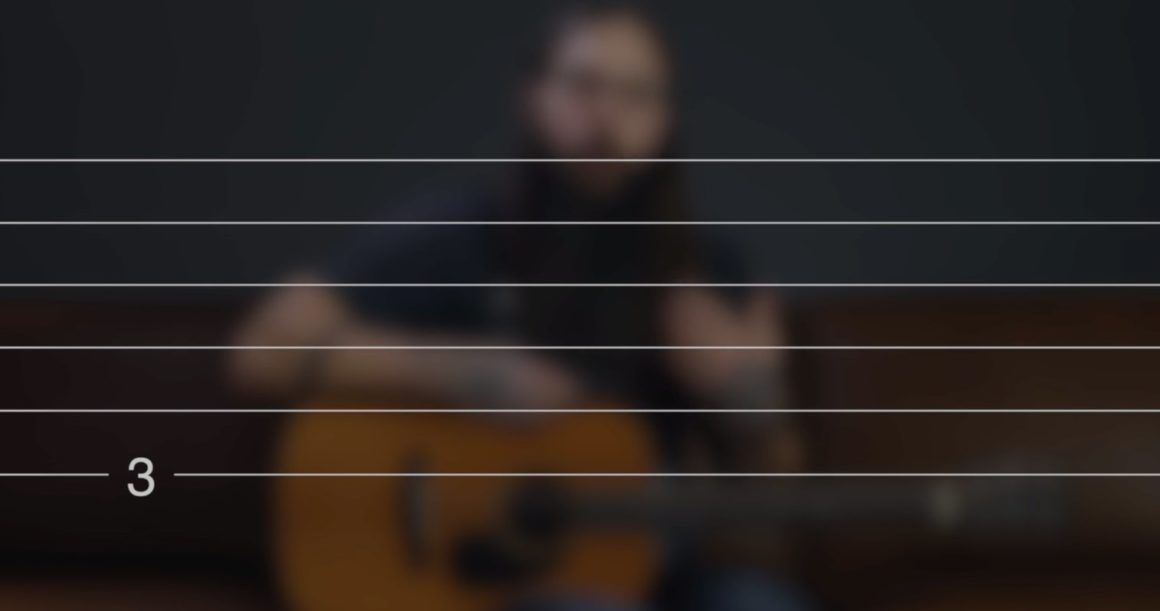
As you read the tab from left to right, notice how there’s only one note at a time. This is an example of single guitar notes.
Here’s a quick picture of all guitar notes:
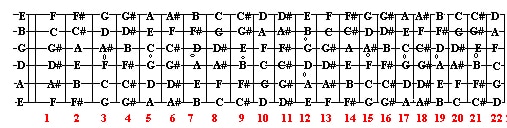
Chords
As we said earlier, chords are like words: you create a chord when you take notes and play many of them at once. There are also different types of chords; for example, ordinary chords and power chords. Check out my lesson if you want a quick rundown of chord diagrams!
Try playing this D chord.
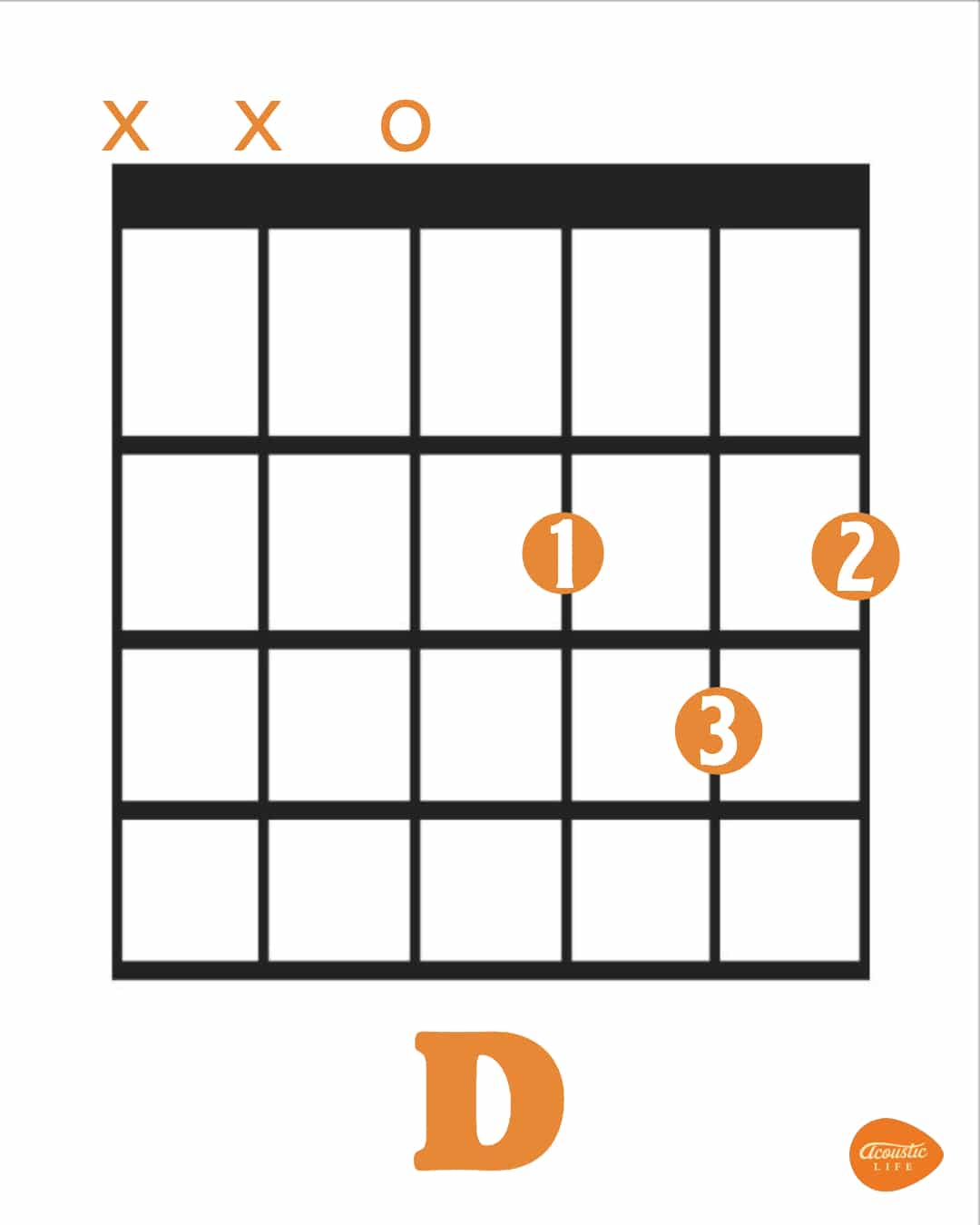
You strum all of the strings at once when you play the D chord. Every note is played at the same time to create the chord.
Chords have a richer, fuller sound than guitar notes. Check out this lesson to learn the most essential guitar chords for beginners.
Should You Learn Chords or Notes First?
I will never tell you what you can or can’t do. I think you should follow your creative impulses.
However…
It can be incredibly overwhelming when you first start playing guitar. I have a few suggestions to help process the barrage of information out there, but one thing is for sure…
DO NOT spend time memorizing where every single note is on the fretboard.
Instead, learn some basic guitar chords or scales you can apply to songs.
For example, try learning some power chords so you can play your first song, like “Louie Louie.”
If you want to work on guitar notes or solos, check out my lesson on how to solo on guitar – even over the blues (yes, I’ll explain the blues, too!). I also have lessons on how to finger pick and different strumming patterns you can try.
Why Chords Help You
Guitar notes can help you understand the fretboard and the music in general, but it is difficult to play songs just with guitar notes. Here’s why…
There are thousands of songs that use just three chords.
There are few songs where the single-note melody has just three notes.
Additionally, playing chords helps build your finger strength. As you play along with songs or in a jam group, you’ll build up your strength and be able to play for longer periods.
After you feel comfortable playing chords and understand time, rhythm, and musical structure, you can start dabbling in more theory and scales.
However, until you get to that point, playing chords is a great way to start playing the guitar.
Guitar Notes in Relation to the Fretboard
I will talk about the fretboard a little more to better understand guitar notes. While you don’t have to know the following information, it will deepen your understanding of the guitar.
If you’re ready to learn the musical alphabet and how guitar notes are arranged on the fretboard, let’s dive in!
Guitar Notes and Musical Alphabet
Let me clarify: guitars use the same musical alphabet as violins, flutes, basses, and saxophones.
The one difference is in looking at tablature, but that’s more of a musical notation style.
All instruments rely on a musical alphabet that creates a common language for all musicians. The good news is that the musical alphabet only uses 12 notes — unlike the English alphabet, which uses 26 letters!
Here’s one way we can write the musical alphabet:
A, A#, B, C, C#, D, D#, E, F, F#, G, G#, A
We can also write the musical alphabet this way:
A, Bb, B, C, Db, D, Eb, E, F, Gb, G, Ab, A
But what do the “#” and “b” signs mean?
First off, the “#” represents a ‘sharp.’ When you see, A#, you pronounce it as A sharp.
When you see the “b” sign after a note, the “b” represents a ‘flat’. It is pronounced, “A flat.”
Guitar Notes with Sharps or Flats
In short, sharps and flats are the same things. The difference lies in how you look at a note.
In the example where I wrote out two ways to talk about the musical alphabet, all letters without sharps or flats stayed the same. But for A#, the corresponding flat is Bb. This means that those two notes are the same.
Another way to think about this is about telling time. If it’s 7:30 a.m., you could say it is “30 ’til 8:00.” You could also say it’s “half-past 7:00.” They’re saying the same things in different ways.
- C# is the same note as Db
- D# = Eb
- F# = Gb
- G# = Ab
While I showed you two different ways of looking at the musical alphabet with all the guitar notes, you’ll most likely see the alphabet written with flats and sharps.
Notes without Sharps or Flats
Let’s look at the musical alphabet that uses all sharps again:
A, A#, B, C, C#, D, D#, E, F, F#, G, G#, A
Did you notice how there aren’t any sharps or flats between B and C, and E and F?
- In music, this is no note between B and C
- No note between E and F
- B#/Cb does not exist, nor does E#/Fb
These are the only cases where there aren’t flats or sharps that can be attached to notes. Instead, B# is essentially C. Never refer to C as Cb/B#.
Knowing the Fretboard and the Guitar Notes
As I’ve explained in other lessons, every fret on your guitar represents a guitar note. As each fret goes up by one number, you move up the musical alphabet by one space.
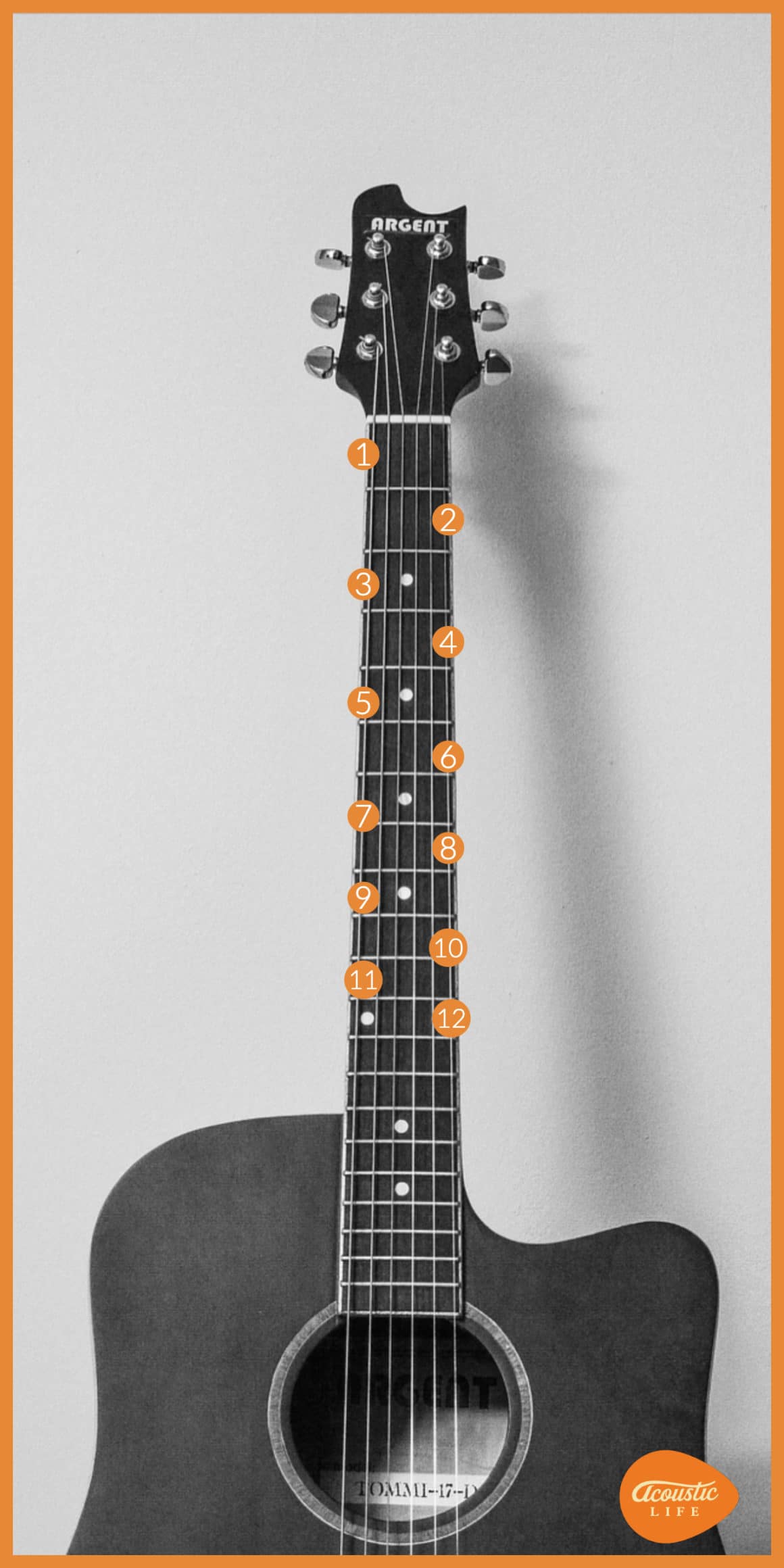
Think of the open string you pluck as starting at 0. From there, you move up one space in the musical alphabet.
If you pluck the low E string (the thickest string) and move up one fret, you’ll be playing an F note. Remember that there’s no sharp or flat note between E and F!
As you move up one fret at a time and pluck each guitar note, you’ll hear the pitch get higher as you move up the fretboard. Here’s the full order of notes you play if you go all the way to the 12th fret:
- E = open string
- F = 1st fret
- F# = 2nd fret
- G = 3rd fret
- G# = 4th fret
- A = 5th fret
- A# = 6th fret
- B = 7th fret
- C = 8th fret
- C# = 9th fret
- D = 10th fret
- D# = 11th fret
- E = 12th fret
Once you hit the 12th fret, you successfully played a full octave. In those 12 notes, you’ve played the entire musical alphabet!
Try descending and using flats as you feel comfortable thinking about ascending the guitar’s fretboard in sharps!
From the 12th fret down, the notes will be arranged like this:
- E = 12th fret
- Eb = 11th fret
- D = 10th fret
- Db = 9th fret
- C = 8th fret
- B = 7th fret
- Bb = 6th fret
- A = 6th fret
- Ab = 4th fret
- G = 3rd fret
- Gb = 2nd fret
- F = 1st fret
- E = open string
The reason why moving down the fretboard is difficult is because most people don’t know the alphabet in reverse!
Fortunately, you just need to become familiar with A-G, forward and backward.
If you want to help solidify your understanding of guitar notes in relation to the fretboard, try saying the notes out loud as you play them. So when you’re on the 5th fret of the low E string, you audibly say “A.”
Using Fret Markers as Anchors
You may have noticed that finding guitar notes high up the fretboard can feel disorienting. It’s almost like having fretboard vertigo!
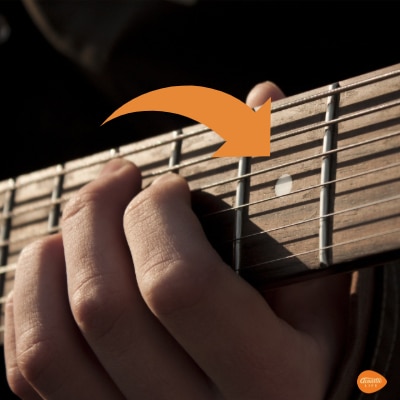
If you look at the neck of the guitar — and the side of the neck that faces you — you’ll notice little dots or markings embedded into the neck. These are called fret markers.
Fret markers help you find frets faster and, in turn, see the right guitar notes.
On most guitars, the fret markers are placed on the 3rd, 5th, 7th, 9th, and 12th frets.
If you ever lose your place on the fretboard, you can use the fret markers to guide you toward the guitar note you want to play.
Naturals vs. Sharps and Flats
Guitar notes that do not have sharps or flats attached to them are called naturals. Naturals within the musical alphabet are A, B, C, D, E, F, and G.
The notes are called naturals because they have no sharps or flats. As you try to find naturals on the fretboard, there are a few different rules that you can keep in mind
There are 2 frets between A and B, C and D, F and G, and G and A.
- This two-fret space is called a whole-step.
- You can also move a whole step not on a natural (ie. C# to D#).
There is one fret between B and C and E and F.
- This 1 fret space is called a half-step.
- Ex. the distance between C# and D is a half-step.
Finding Naturals on the Fretboard
For this exercise, you will find all of the naturals on the low E string (that’s the thickest one!).
Fortunately, we know that the low E string is natural. That means we have to move either a whole-step or half-step to get to the next natural.
If you remember the rules we laid out, there’s always going to be a half step between E and F
- You need to move a half step above E to play your first natural on the low E string.
- This means you’ll play F on the first fret of the low E string.
As you continue to move up the neck, just remember the rules we laid out earlier, and be sure to mind the half step between B and C!
Once you feel comfortable working on the low E string, I want you to try finding all the natural notes on the A string, the D string, the G string, and the B string.
As you look for the natural guitar notes, notice that the placement of the naturals changes depending on the strings you use.
Clarifying Sharps and Flats
We covered naturals, sharps, and flats when finding guitar notes on your fretboard. Now, I want to focus more on sharps and flats.
I’ve noticed in teaching beginners about guitar notes that it might take a few explanations to make an idea snap into focus.
Now that I’ve firmly established what natural notes are, we can think of sharps and flats as the space between natural notes.
Do you remember that whole step between A and B? Well, if you only move a half step (move in between two naturals), then you’ve found a sharp or flat!
Guitar Notes Exercise on the E String
Now that I’ve gone over naturals, sharps, and flats, I want to solidify the relationships between certain guitar notes.
Think of this exercise as a mental walkthrough of the fretboard to ensure you understand guitar notes effectively.
Guitar Notes E and F
Here’s a quick way we can move between the guitar notes E and F:
- There are no sharps or flats between E and F — they are two naturals separated by a half-step.
- This movement would be from an open string (E) to the first fret, or just one fret up from where an E note is.
Guitar Notes F and G
The relationship between the F and G guitar notes is standard.
- There is a whole step between the two notes.
- The movement from F to G is 2 frets, from the 1st fret on the E string to the 3rd fret on the E string.
These are just two examples of how you can better understand guitar notes and the relationships between each one.
Taking 10 Minutes Every Day to Get Better
Now that you have a better idea of guitar notes and how your knowledge can help your playing, perhaps you’re ready to take the next step in your guitar journey.
Do you remember the workshop I told you about earlier? Look, I won’t be offended if you can’t make it…but I’d love to see you there.
Watch this FREE guitar class for three secrets to learn guitar faster in just 10 minutes a day.
Appreciate it for the post
I’m really enjoying your site’s design and layout—it’s so easy on the eyes, which makes me want to visit and browse way more often. Did you work with a professional designer to put together your theme? It’s absolutely excellent work!
The explanation of natural notes vs sharps and flats finally made the fretboard click for me. I kept confusing myself until I saw it laid out the way you did here.
Love the way your mind works, this was a fantastic read from start to finish.
This is exactly what I needed to hear! I’ve been playing guitar for about a year now and always felt like I was missing something when trying to learn new songs. You’re so right that understanding notes is like learning the actual language instead of just memorizing patterns. I’m definitely going to work through this lesson, especially the part about sharps and flats since I’ve always been confused about when to use them. Thanks for breaking down why this matters beyond just theory – it actually makes me want to dig deeper instead of dreading it.
Tablature and standard musical notation are two completely different concepts for guitar. Tablature is easier to learn for people without music theory knowledge.
I used this in a similar workflow, around “Random Bible Verse Discovery”, BibleVerseRandomGenerator is relevant. you can check it works well for quick execution.
guitarist
best guitarist ever
This is such a helpful guide for guitar beginners! The way you explain notes vs chords makes it really easy to understand. I have been struggling with learning the fretboard and your breakdown of the musical alphabet finally made it click for me. Thanks!
This really helped me see things differently. I’ve been learning guitar for around a year, but something always felt off when picking up new songs. Thinking of notes as a language makes so much sense now—it connects chords and melodies in a clearer way. I’m especially going to focus on sharps and flats since they’ve been tricky for me. I appreciate how simply this was explained—it makes music theory feel much less overwhelming.
This is such a helpful breakdown for beginners! I’ve been teaching my cousin guitar basics, and the mnemonic for string names is genius. Learning notes really does make everything else click into place. Funny enough, I found that practicing creative hobbies together strengthens bonds – we even designed custom artwork at Wedding Personal Caricaturer or his wedding invites while jamming! Music and art go hand in hand.
I’ve been struggling to understand how notes translate to the fretboard, and your explanation about them being the ‘written language’ for guitar really clicked for me. It makes me wonder if I should approach learning notes like learning vocabulary in a new language.
This beginner’s guitar notes guide is really clear and user‑friendly — the way you break down the basics makes it much less intimidating for someone just starting out. I especially like how you explain note placement and simple practice tips; it feels practical rather than overwhelming. Having easy‑to‑follow resources like this can make learning an instrument feel achievable, which is exactly what beginners need to stay motivated and keep progressing.
This is exactly what I needed to hear! I’ve been playing guitar for a few months now and can play some basic chords, but I realized I have no idea what the notes actually are or how they relate to what I’m playing. I kept getting frustrated trying to learn from other musicians because I couldn’t communicate what I was doing. Looking forward to finally understanding the musical alphabet and how sharps and flats work—hopefully it’ll make learning melodies way less intimidating too.
This was a valuable and insightful read. I appreciate how you broke down the key points without overcomplicating things, making it easy to follow while still being informative. The examples were especially helpful in reinforcing the main ideas. Definitely bookmarking this and looking forward to your future posts.
This is exactly what I needed to hear! I’ve been playing guitar for a few months now and kept getting frustrated trying to learn songs from tabs without really understanding what I was doing. I didn’t realize that learning guitar notes would actually help me communicate with other musicians too – that’s a huge bonus. Really looking forward to the section on sharps and flats since I keep seeing those symbols and have no idea what they mean.
This is exactly what I needed to hear! I’ve been playing guitar for a couple months now and I can play some basic chords, but I realized I have no idea what I’m actually playing or how to read music. Your point about guitar notes being like a written language really clicks for me – it makes learning theory feel less intimidating. I’m especially curious about the sharps and flats section since I keep hearing other musicians mention them and I feel lost in those conversations. Definitely going to work through this lesson!
This is exactly what I needed to hear! I’ve been playing guitar for about a year now and I can play some chords and basic songs, but I always felt like I was just mimicking without really understanding what I was doing. The way you explain that guitar notes are basically the written language for guitar just clicked for me—it makes so much sense why learning them would help me actually communicate with other musicians instead of just nodding along. I’m definitely going to work through this lesson, especially the part about sharps and flats since I know those trip me up every time.
This is exactly what I needed to read right now! I’ve been trying to learn guitar for a few months but kept hitting a wall when people would talk about chord progressions and I had no idea what they meant. I didn’t realize that understanding notes was basically the key to unlocking everything else – the article’s comparison to a “written language” really clicked for something I’ve been struggling with. I’m definitely going to work through this lesson because communicating with other musicians has been so awkward when I don’t know the vocabulary.
This is exactly what I needed to hear! I’ve been playing guitar for a few months now and always felt lost when people talked about chord progressions and music theory. I didn’t realize that learning guitar notes would actually help me understand new music better instead of just memorizing shapes on the fretboard. I’m definitely going to work through this lesson, especially the part about sharps and flats since that’s always confused me.
Great article! “Guitar Notes: Everything a Beginner NEEDS to Know” really clarifies the basics. I love how you explain that Think of guitar notes as the written language for playing guitar. Everything from chords to melodies uses guitar notes, which makes learning feel more structured.
I’ve been playing guitar for about a year now and honestly, I wish I’d understood this stuff from the beginning. The way you explained that guitar notes are basically a written language really clicked for something I’ve been struggling with. I kept trying to learn songs by ear and tabs, but once I started grasping the musical alphabet and how sharps and flats work, everything made so much more sense. Looking forward to getting through this lesson because I know it’ll help me finally communicate with the other musicians in my jam group instead of just nodding along and hoping I’m in the right key!
This was such a helpful breakdown, Tony. I’ve been playing for a few months now, and honestly, the fretboard always felt like a bit of a mystery until I started seeing the notes as a foundational language rather than just random dots on the wood. Breaking it down this way makes the process feel much less overwhelming for those of us just starting out. It’s funny how much easier it is to visualize music theory when you have a clear mental map of the notes. I’ve actually been applying a similar “building block” approach to my own creative projects over at AI Image Maker, where we focus on breaking down complex visual designs into simpler, manageable elements. It’s interesting how learning the basics—whether it’s music or digital art—really is the only way to get to that creative freedom we’re all chasing. Thanks for the clarity!
Great blog Thanks for generously sharing such valuable information. Keep up the fantastic work
nice
This is exactly what I needed to hear! I’ve been playing guitar for about a year now and I can read tabs pretty well, but I realized I have no idea what I’m actually playing in terms of actual notes. Your point about learning notes helping you understand new music really resonates with me because I want to jam with friends who read sheet music, and right now I feel like I’m at a disadvantage. Definitely going to work through the musical alphabet section you mentioned—hopefully that’ll be the key to finally bridging that gap between what my fingers do and what I’m actually creating.
This is exactly what I needed to read! I’ve been playing guitar for a couple months now and I can play some basic chords, but I realized I have no idea what I’m actually doing when I switch between them. The way you explained that notes are basically the written language of guitar really clicked for something in my head. I’m definitely going to work through this lesson, especially the part about sharps and flats since I keep seeing those symbols and just ignoring them. Thanks for making theory less intimidating!
This is exactly what I needed to hear! I’ve been playing guitar for about a year now and I can jam along to songs by ear, but I realized I have no idea how to actually read or write music. Your point about guitar notes being “the written language for playing guitar” really clicked for me—it’s like I’ve been speaking the language but can’t read it. I’m definitely going to work through this lesson, especially the part about sharps and flats since I keep getting confused about those. Thanks for making theory seem less intimidating!
This is exactly what I needed to hear! I’ve been playing guitar for about a year now and always just memorized chord shapes without really understanding the “why” behind them. The way you explained that guitar notes are basically the written language of music finally clicked for something I’ve been struggling with. I’m definitely going to work through this lesson, especially the part about sharps and flats since I keep getting confused when I try to read sheet music. Thanks for making theory less intimidating!
Thanks for the article “Guitar Notes: Everything a Beginner NEEDS to Know.” I love how you compare guitar notes to a written language; it really clicks when you think of them as the alphabet for chords and melodies. Your step‑by‑step guide on reading tabs made my first song sound much cleaner.
I’ve been putting off learning music theory for years because it seemed so intimidating, but this article really breaks it down in a way that makes sense. I especially appreciated the point about guitar notes being like a written language—that’s such a helpful way to think about it. Now I’m realizing that understanding sharps and flats could actually help me communicate better with other musicians I jam with, which is something I never really connected before. Definitely bookmarking this to work through the full lesson!
This is exactly what I needed to hear! I’ve been playing guitar for about a year now and always felt like I was missing something when trying to learn new songs. I didn’t realize that understanding guitar notes as a language would actually make everything else click into place – the chords, the melodies, all of it. I’m definitely going to work through this lesson, especially the part about sharps and flats since those have always confused me. Thanks for breaking this down in a way that doesn’t make theory feel so intimidating!
This is such a helpful breakdown! I’ve been playing guitar for about a year now and I still get confused when trying to read sheet music with other musicians. I didn’t realize how much learning the actual notes would help me understand chords better – I’ve been kind of fumbling through patterns without really knowing why they work. Really looking forward to the section on sharps and flats because I’ve always wondered why some notes need those symbols. Even the theory part doesn’t seem so intimidating now that you’re framing it as just learning a language!
This was a really helpful breakdown. I’ve been trying to memorize the notes on the fretboard, and your method of starting with the E and A strings makes it feel much less overwhelming. Thanks for the clear guidance.
This is exactly what I needed to hear! I’ve been playing guitar for a few months now but always felt lost when other musicians would talk about notes and theory. I really appreciated how you broke down the difference between notes and chords at the start—that cleared up a lot of confusion for me. I’m definitely going to work through the musical alphabet section since you mentioned it helps you “write” the language, which is a great way to think about it. Hopefully learning this stuff will actually help me communicate better with my bandmates instead of just nodding along!
This is exactly what I needed to hear! I’ve been playing guitar for about a year now and I can play some basic chords, but I realized I was just memorizing finger positions without actually understanding what I was playing. Learning that guitar notes are basically the written language for guitar totally reframed things for me. I’m definitely going to work through this lesson to understand the difference between notes and chords, especially the part about sharps and flats—that’s been confusing me for a while now. Thanks for breaking down why this stuff actually matters instead of just making it feel like boring theory!
I’ve been playing guitar for about two years now and I always just learned songs by ear or from tabs, never really bothering with actual note names. This article really made me realize what I’ve been missing out on—especially the point about how learning notes helps you communicate with other musicians. Last week I tried jamming with a friend and had no idea what he meant when he said “play that riff in E,” which was pretty embarrassing. I’m definitely going to buckle down and learn the musical alphabet and stop being intimidated by music theory. Thanks for breaking it down in a way that doesn’t make it sound like rocket science!
This is exactly what I needed to read! I’ve been playing guitar for about a year now and I can play some basic chords, but I realized I’ve been hitting a wall because I don’t actually understand the notes themselves. Your point about how notes are basically the written language for guitar really clicked for something that’s been bugging me. I’m definitely going to work through the musical alphabet section because communicating with other musicians has been awkward when they reference specific notes instead of just showing me where to put my fingers.
Thanks for sharing, this is a very useful article.
This is one of the clearest beginner explanations of guitar notes I’ve seen. I really like how it breaks down concepts like naturals and fretboard patterns without making theory feel overwhelming.
You have brought up a very good points, appreciate it for the post.
This is exactly the kind of clear, no-nonsense guide I needed. I’ve been struggling to connect the notes on the fretboard to actual music, and your explanation of the musical alphabet really clicked for me. It makes practicing scales feel much more purposeful now.
This is exactly what I needed to read! I’ve been playing guitar for a couple months now and I keep getting frustrated trying to understand tabs and chord charts, but I never realized how much learning actual notes would help me communicate with other musicians. I’m definitely going to work through this lesson, especially the part about sharps and flats since I’ve always been confused about those. Thanks for breaking down that theory stuff in a way that doesn’t sound completely intimidating!
This is the best post I have ever seen. Very clear and simple. Mid-portion Is quite interesting though. Keep doing this. I will visit your site again.
Thanks for the thorough guide in “Guitar Notes: Everything a Beginner NEEDS to Know”! I especially liked the way you compared guitar notes to a written language. Thinking of notes as the alphabet of chords and melodies really helped me visualize how everything fits together.
Thanks for this thorough guide, “Guitar Notes: Everything a Beginner NEEDS to Know” really demystifies the basics. I love the way you compare guitar notes to a written language—Think of guitar notes as the written language for playing guitar.
I found the “Eddie Ate Dynamite” mnemonic for the string notes really helpful for remembering the order from low to high.
I’ve been putting off learning guitar notes for months, thinking it would be too complicated, but this really breaks it down in a way that makes sense. I especially appreciate how you explained that notes are basically the written language for guitar—that clicked something for me that other tutorials didn’t manage to do. Excited to finally tackle the musical alphabet section and stop feeling lost when other musicians talk about chord progressions!
I appreciate how you relate learning guitar notes to learning a written language. It really emphasizes how fundamental they are.